This is a guest post by Simon Campbell
Facebook is not only the most popular of the many social networks; it’s also the most prone to changes. What worked well just a few short months ago on the site may not be the best formula to try in 2014.
Changes in the News Feed have been among the most recent from the site. With a much larger emphasis on quality content that weights well via Facebook’s unique algorithm, marketers are forced to up their engagement tactics in order to survive inside of News Feeds without being missed, ignored or forced out.
Along with other changes, such as the sheer size of the mobile market today, anyone’s Facebook ad tactics should be updated. Not overhauled, just tweaked to remain a relevant and engaging brand on the site.
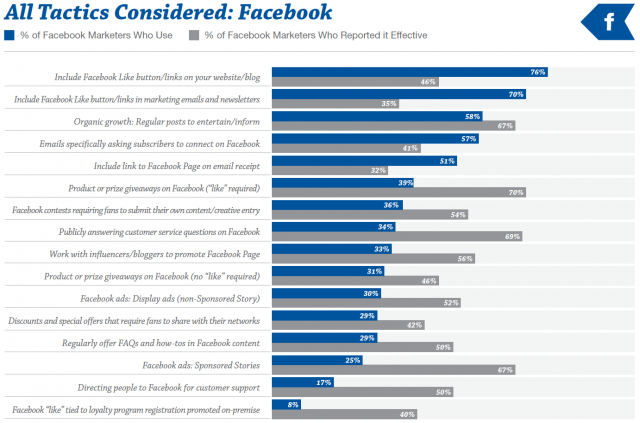
The Audience Growth Survey: Subscribers, Fans, & Followers – Report #22 by ExactTarget a Salesforce.com company
3 Must-Use Ad Tactics for Facebook Marketers
1: Find the Right App
Facebook presents many tools to help marketers achieve success without having to venture offsite for much of anything. However, creating, testing, tweaking and targeting content is exceedingly difficult to do without some third-party assistance. Marketers looking for a sharper edge this year should try to find a third-party ad-management application that offers freedom and ease of use.
What you’re looking for in the right ad-management app includes:
- The ability to schedule entire ad campaigns
- Automated campaigns with rules you (the user) create
- A plug-n-play Google Analytics feature
- A streamlined interface
- Templates for saved work
- Organizational folders
- Split-testing capabilities
- Easy features for creating ad variations
- Full control over which ads are actually used.
The end results is an easily programmable app that allows you to create, change, test and launch entire ad campaigns on a schedule you select, using ads you personally deem appropriate for the task. Every other tactic’s success depends in large part on the app you select for your ads.
2: Expand on Proven Organic Content
While paid advertising will, by design, always trump organic reach, many marketers find that some of their best ongoing success comes by way of everyday posts that ultimately build an organic following. Due to changes with Facebook’s Promoted Posts feature, you can now take an ad that was already popular and really kick it into overdrive with a bit of paid targeting.
Used in conjunction with your ad-management app to fine-tune the targeting, a Promoted Post can provide you with a litany of benefits, including:
- The ability to boost a post visitors have already been engaged with
- Adding new life to a post you feel hasn’t run its course
- More views in more News Feeds
- A longer lifespan in News Feeds for quality, paid posts
- An expansion of the audience every time someone engages with the post
- The ability to pin the post to your own page
- An affordable way to keep pace with bigger brands
Along with greater reach comes greater recognition. Using a Promoted Post in 2014 is one of the safest, most affordable, and effective forms of Facebook advertising.
3: Target Small
Although niche marketing is a tried-and-true principle of advertising that doesn’t change much on a year-on-year basis, 2014 presents a couple of solid reasons to quickly narrow your advertising focus. With more brands, more mobile users, and many more advertisements, focusing on direct niche marketing allows you to target those most likely to engage. This offers quality control abilities you wouldn’t otherwise have.
When setting up your next advertising campaign, think about:
- Starting with no more than 1,000 people
- Split-testing and tracking variations of ads for effectiveness
- Choosing a single interest so that you can directly target prospects
- Split your campaign between male and female, measuring the results
- Try age variations to see which demo bites the hardest
Targeting small, and in spurts, allows you to quantify your efforts easily and without must hassle. After seeing which group is most responsive to a certain ad type, you can begin expanding your efforts to draw more interest from more areas.
Bonus Tip: Tracking Advice
No matter the type of app you’re using, the type of ad you’re releasing, or the size of the market you’re targeting, your progress must be tracked in order to ensure the success of your tactics. Releasing an ad campaign and letting it run its course without a watchful eye could result in disaster.
Use Facebook Insights to your advantage to view your engagement numbers, such as Likes, comments, shares, etc. You can view an assortment of graphs to tell you if you’re heading in the right direction.
Using the right app for ads is also going to give you an easy way into Google Analytics. This is a more in-depth analysis of how your campaign is doing. You can track URLs, create separate landing pages, and pretty much customize the system for optimum convenience.
Tracking allows you to tweak when necessary, to cut your losses if needed, and to double-down on working tactics. A campaign that’s not being tracked is a campaign doomed to failure.

About the Author: Simon Campbell, a writer from a Facebook ad campaign tool – Qwaya. He loves to write different topics about social media and participates in some communities and forums. If you have more social media marketing questions, feel free to ask Simon on Twitter


What is Your Basic Unit of Upside?
Conversion OptimizationThis number — The Basic Unit of Upside, or BUU — offers simple insight into the effect of website optimization on your business.
Subscribe to Podcast
My new Marketing land article answers some burning questions for your business. If these questions aren’t burning in your mind, then why not?
The ultimate question is this: How will small changes in conversion rate affect my yearly revenue? This is the promise of understanding your BUU.
21 Quick and Easy CRO Copywriting Hacks
Keep these proven copywriting hacks in mind to make your copy convert.
"*" indicates required fields
My Most Popular Landing Page Presentation LIVE Online
Landing Page OptimizationMy presentation “The Chemistry of the Landing Page” has been seen by thousands of (lucky?) marketers and business people. I think it’s one of my best.
The reason I think it is so popular is that it’s different every time. Each time I do it, I critique a different bunch of actual landing pages.
I start off by boiling the process of building a landing page into five components. Then I show you what makes people leave. Attendees usually start kicking themselves when at this point in the presentation.
But the fun starts when we start applying this to real landing pages. Things always get interesting.
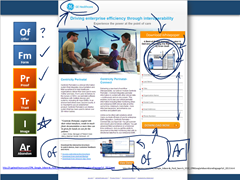
But even if you end up feeling a little embarrassed about your page – and everyone does – wouldn’t more sales, leads and subscribers make it worth the discomfort?
Here’s a little sample of the questions I tackle.
3 Must-Use Facebook Ad Tactics for 2014
Conversion Marketing StrategyThis is a guest post by Simon Campbell
Facebook is not only the most popular of the many social networks; it’s also the most prone to changes. What worked well just a few short months ago on the site may not be the best formula to try in 2014.

Changes in the News Feed have been among the most recent from the site. With a much larger emphasis on quality content that weights well via Facebook’s unique algorithm, marketers are forced to up their engagement tactics in order to survive inside of News Feeds without being missed, ignored or forced out.
Along with other changes, such as the sheer size of the mobile market today, anyone’s Facebook ad tactics should be updated. Not overhauled, just tweaked to remain a relevant and engaging brand on the site.
The Audience Growth Survey: Subscribers, Fans, & Followers – Report #22 by ExactTarget a Salesforce.com company
3 Must-Use Ad Tactics for Facebook Marketers
1: Find the Right App
Facebook presents many tools to help marketers achieve success without having to venture offsite for much of anything. However, creating, testing, tweaking and targeting content is exceedingly difficult to do without some third-party assistance. Marketers looking for a sharper edge this year should try to find a third-party ad-management application that offers freedom and ease of use.
What you’re looking for in the right ad-management app includes:
The end results is an easily programmable app that allows you to create, change, test and launch entire ad campaigns on a schedule you select, using ads you personally deem appropriate for the task. Every other tactic’s success depends in large part on the app you select for your ads.
2: Expand on Proven Organic Content
While paid advertising will, by design, always trump organic reach, many marketers find that some of their best ongoing success comes by way of everyday posts that ultimately build an organic following. Due to changes with Facebook’s Promoted Posts feature, you can now take an ad that was already popular and really kick it into overdrive with a bit of paid targeting.
Used in conjunction with your ad-management app to fine-tune the targeting, a Promoted Post can provide you with a litany of benefits, including:
Along with greater reach comes greater recognition. Using a Promoted Post in 2014 is one of the safest, most affordable, and effective forms of Facebook advertising.
3: Target Small
Although niche marketing is a tried-and-true principle of advertising that doesn’t change much on a year-on-year basis, 2014 presents a couple of solid reasons to quickly narrow your advertising focus. With more brands, more mobile users, and many more advertisements, focusing on direct niche marketing allows you to target those most likely to engage. This offers quality control abilities you wouldn’t otherwise have.
When setting up your next advertising campaign, think about:
Targeting small, and in spurts, allows you to quantify your efforts easily and without must hassle. After seeing which group is most responsive to a certain ad type, you can begin expanding your efforts to draw more interest from more areas.
Bonus Tip: Tracking Advice
No matter the type of app you’re using, the type of ad you’re releasing, or the size of the market you’re targeting, your progress must be tracked in order to ensure the success of your tactics. Releasing an ad campaign and letting it run its course without a watchful eye could result in disaster.

Use Facebook Insights to your advantage to view your engagement numbers, such as Likes, comments, shares, etc. You can view an assortment of graphs to tell you if you’re heading in the right direction.
Using the right app for ads is also going to give you an easy way into Google Analytics. This is a more in-depth analysis of how your campaign is doing. You can track URLs, create separate landing pages, and pretty much customize the system for optimum convenience.
Tracking allows you to tweak when necessary, to cut your losses if needed, and to double-down on working tactics. A campaign that’s not being tracked is a campaign doomed to failure.
About the Author: Simon Campbell, a writer from a Facebook ad campaign tool – Qwaya. He loves to write different topics about social media and participates in some communities and forums. If you have more social media marketing questions, feel free to ask Simon on Twitter
Our Improved Conversion Upside Report
Conversion OptimizationWe’ve redesigned our Conversion Upside Report so you can more quickly understand how much you should be investing in website optimization. We’ve used color and short commentary on six different criteria to help you understand where your site is on the spectrum of online businesses.
The Upside Report analyzes the current state of your online business and evaluates your readiness for an optimization program.
Every website will eventually add optimization to their tool belt. The question is when and how much should I spend?
The Conversion Upside Report seeks to answer that question.
All you need are the answers to three questions:
At a glance, the report tells you some important things.
These are the questions you should be asking now if you want to have future success online.
Get your Conversion Upside Report and let me know what you learn.
Brian Massey, Conversion Scientist
The Scent that Increases Online Sales
Ecommerce CROWe test just about everything we can here at Conversion Sciences. We are always surprised by what new technologies teach us about people, even if the technologies aren’t widely available.
 We’ve been fortunate to participate in a trial of the new oPhone, a device manufactured by Vapor Communications. The oPhone transmits scent across the Web, right to the desks of shoppers and to their olfactory receptors. Vapor has put the device into a large group of beta testers who keep it attached to their computers while they go about their daily tasks.
We designed a test to understand which scents drove more sales of which products on a client site that sold a variety of products. Would a leather scent sell more shoes? Would a male cologne make women buy more?
We designed a system that would send one of ten different scents to any individual oPhone beta users that visited a client website. They were never told when they were visiting an oPhone enabled site.
The scents we tested were leather, lavender, bubble gum, Old Spice cologne, new car, pine, Febreze®, Chanel No. 5, mint, and no-scent. Each of these scents required that we have a separate oPhone attached wirelessly to a one of ten computers. These were then routed through our testing software for delivery to the oPhones attached to the beta testers’ computers.
Why odor is different from our other senses
Odor is of particular interest to us because of the way the brain processes odors. It is the only one of the five senses that bypasses the thalamus, the traffic-cop of the brain. Smells, it seems, have free and direct access to the limbic system – the “lizard brain” – and the neo-cortex, where memories and experiences are stored. This, it is believed, is why smells are able to transport us to places we’ve been before, affecting our moods, emotions, and appetite.
Smell requires fewer “clicks” to reach it’s destination.The oPhones device both “records” scents and “plays them back.” It will accept a scent in the form of a gas, spray or aerosol. The devices analyze the odor and transmit a signature to the host computer who then controls when that signature is sent (scent?) to the visitor’s computer via IP triangulation. If the visitor’s computer is connected to an oPhone, the odor is reproduced for them.
As our tests reached statistical significance, the “Old Spice cologne” odor was winning for all products in all categories, far above the other eight scents and the control (no scent).
“Why was mint so successful in driving sales?” we wondered. So we played the scent back on our oPhone.
It wasn’t Old Spice.
The subtle, yet nostril-inflaming aroma was quickly identified as belonging to the methane family of gases. Methane is rare in urban society, outside of the water closet.
One of our scents goes awry
It seems that keeping track of ten oPhones and ten computers and ten test treatments proved too much for the person setting up these tests. An investigation revealed that one of the team members dropped an oPhone into their lab coat pocket in a rush to get off to the bathroom.
During their extended visit to the loo, our test assistant was back in the lab capturing scent samples from each of the oPhones. She didn’t notice that one was missing. As far as we can tell, she captured a smell signature from the oPhone sitting in the pocket of his bowl-clearing colleague. It was supposed to be the “Old Spice” odor.
Of course, we were relieved to have discovered the error. We would have had trouble convincing people that this guy had the odoriferous secret to sales of almost any product.
We were also able to recommend some dietary changes to our colleague. Something just wasn’t right there.
Nonetheless, we were left with a puzzle. Why did a scent that no one would consider odorable win so handily in our tests.
Relief is a powerful motivator
We believe that the issue at work here is “relief.” Whatever our oPhone-stealing colleague had eaten the night before, the central compound in the odor was methane. This is true for all of us. After years of daily visits to our porcelain sculpture gardens, our brains learned to associate methane with a feeling of relief; a lighter feeling; a feeling that our vertical leap is maybe a few centimeters higher. All of these feelings were accompanied by one distinct smell: methane.
Methane means “things are good” to our limbic brains.
We speculate that people are tense when they shop. Perhaps the olfactory signal that relief has arrived made them feel more comfortable buying online. It could be true.
Another hypothesis is that the odor made them feel that they needed to empty their carts quickly, before they “had an accident.”
None of these conjectures can be verified without more testing.
What scent do you think we should test next? Let us know in the comments before April Fools day is over.
Social Commerce: Which Social Media Platforms Drive the Most Sales? [INFOGRAPHIC]
Ecommerce CRODo Facebook posts, Tweets, and YouTube videos convert anything into sales? Are we wasting our time? Is there really any point in social commerce at all?
To better understand how social media is impacting the eCommerce industry, Shopify analyzed data from 37 million social media visits that led to 529,000 orders. In the process, they uncovered loads of interesting statistics that you need to see. Some surprising facts include:
Conversion Sciences is Now Accepting New Customers
News & EventsThe website optimization market is hot. And why not? The value proposition is pretty straight forward.
If you invest in conversion optimization, you get more revenue and leads from your existing traffic. Done right, the additional sales will more than pay for the optimization effort.
It’s a capability every online business will have to embrace in the coming year.
Is it the right time for your business? You could be enjoying the fruits of an optimization effort before summer’s end.
We have openings for businesses like yours – ecommerce businesses, lead generation businesses, professional services businesses and SaaS businesses.
In just 120 days, we’ll increase your sales, make the phone ring more often, or get you more subscribers. We measure everything, so you’ll see the proof.
And we’ll find the extra revenue to cover the cost of the effort and more.
If you’d like to be one of our satisfied customers, call us at 888-961-6604. I’m at extension 701.
Find out what to expect from a call with us.
Conversion Sciences is now accepting new new winners.
Brian Massey
(888) 961-6604 x701
[hide_email brian@conversionsciences.com]
KISSmetric's Road Map for a Trustworthy eCommerce Website – [INFOGRAPH]
Ecommerce CROEvery contact a visitor has with an eCommerce website is an opportunity for a business to gain trust and build a lasting relationship.
In this amazing infographic, KISSmetrics breaks down how a business can do that, at multiple touch points in the customer lifecycle. Thank you KISSmetrics for the share.
Bryan Eisenberg Explains Amazon’s Relentless Customer-Focused Optimization [INFODOODLE]
Conversion OptimizationWe have all done it.
We have a purchase in mind. We drive to the store, any store, and focus all of our attention on completing this mission successfully.
We wander aimlessly around crowded aisles and end caps stuffed with closeouts and uncategorized “junk”. Giving up the scavenger hunt, we now look for a customer service attendant to help us out.
We wait. We continue to wait until we catch the eye of a reluctant employee. We ask for help and low and behold, they are out of stock.
What do we do now? We order it on Amazon.
You still might be asking yourself, if only 10% of purchases are made online, how is it that Amazon is kicking Walmart’s butt?
Jeff Bezos says
“We are not in the business of selling books, but of helping our customers buy books.”Brian Massey attended Conversion Conference and captured this infodoodle of Bryan’s Keynote Presentation: How Amazon Uses Relentless Customer-Focused Optimization to Crush Competitors.
Share this Image On Your Site
Please include attribution to Conversion Sciences with this graphic.
Keeping Customers is Cheaper than Creating Conversions
Conversion OptimizationThis is a guest post by Ryan Farris.
According to a study conducted by Bain and Co., the cost of acquisition for a new customer can be 600-700% more expensive than retaining an existing customer. This is not surprising to anyone.
So, why is that so many companies still struggle with high rates of attrition. Sure, part of it is “the grass is always greener” mentality that some consumers adopt, but part of it is that the people on the front lines are not equipped with the tools needed to build the trust and provide the value that customers need.
With the availability of information online, on television, and real-time social media updates, customers are equipped with more information than ever before. With access to all of this free information, it is more important than ever to prove your worth. Today, your worth is measured by customer service, trust, and convenience.
The State of Customer Service in a Consumer Driven Marketing – ClickSoftware Field Management
If you cannot prove to be more valuable to them than the other sources, then you’re on your way to paying those inflated acquisition costs again.
Businesses find themselves unable to provide that value. In a recent study, Forrester determined that poor systems, outdated customer service interfaces and archaic applications meant that forty-two percent of customer service agents were unable to efficiently resolve consumer issues and disputes.
This poor service is not without consequences. A study by Global Customer Services indicates that consumers are twice as likely to share negative customer service experiences as they are positive ones. Avoiding negative reviews by equipping your reps with the tools necessary provide a positive experience would be a priority for any company.
This Zendesk infographic highlights the effects of bad customer service.
It isn’t sufficient to offer a great product at a great price.
According to Bain and Co., a customer is 400% more likely to switch to a competitor if their problem is with a company’s service.Your excellent service must be delivered promptly. Customers are 33% more likely to recommend a brand that provides a quick response, even if it proves ineffective. Twelve percent are willing to recommend a brand that provides an effective response even if it is slow. Clearly, speed is king.
To summarize, fast service is how you keep customers and minimize your acquisition costs. Fast service requires that your service reps have instant access to information that will allow them to deal with customer issues. This is as much a marketing issue as a service issue.
We call this “Relationship Marketing.” Relationship marketing platforms put important information in the hands of sales reps and service agents, information needed to satisfy customers. Marketing is no longer at the mercy of other organizations to retain customers with tools like these. Instead, they can feed the necessary content, assets and data sources directly to the people on the front lines.
When you retain customers, you retain revenue and can reduce acquisition costs. Relationship management empowers your sales and service organizations to succeed with existing clients.
Ryan Farris is the President of EarthIntegrate. At Earthintegrate, he has focused his energies on aiding and empowering enterprise companies to grow and manage sales/marketing in complex or regulated industries.You can connect with Ryan on LinkedIn. Visit Earthintegrate Resources to get more Technology Powered Resources, such as whitepapers and case studies, from Earthintegrate.